Slow-Braised Beef Roast with Cranberry Balsamic Glaze
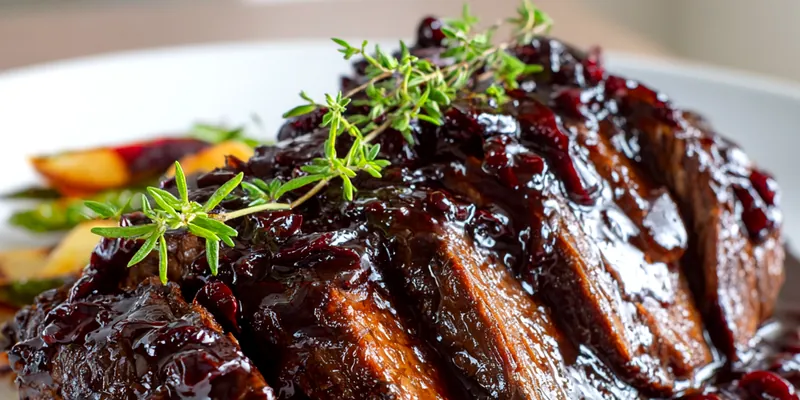
This Slow-Braised Beef Roast with Cranberry Balsamic Glaze is a perfect dish for gatherings and special occasions. The savory beef is complemented by a tangy and slightly sweet glaze that enhances its flavor. With minimal prep time and effortless cooking, it's a crowd-pleaser that will leave everyone asking for seconds. Enjoy the rich aroma as it fills your kitchen during the cooking process.
Why Slow-Braising is Key
Slow-braising is a cooking method that allows tough cuts of meat to become tender and flavorful. The low and slow heat breaks down the connective tissues, resulting in a melt-in-your-mouth texture. It’s the ideal technique for a beef roast, ensuring every bite is juicy and delicious.
In this recipe, the addition of a cranberry balsamic glaze not only enhances the flavor but adds a beautiful color to the dish. This unique combination is perfect for impressing guests at any dinner table. Plus, the aromas that fill your kitchen while it cooks are simply irresistible.
💡 Professional Tip
Ensure that your beef is at room temperature before searing for a better crust. Additionally, don’t rush the braising process; allow the flavors to develop and meld beautifully.
Frequently Asked Questions
Yes, this beef roast can be made ahead of time. Prepare the dish as instructed and let it cool completely before refrigerating. It can be stored in the refrigerator for up to three days. Simply reheat in the oven before serving.
If you don’t have balsamic vinegar, you can substitute it with red wine vinegar or apple cider vinegar mixed with a little bit of honey for sweetness. This will provide a similar tangy flavor profile to the dish.
Absolutely! You can adapt this recipe for a slow cooker by searing the beef as instructed, then transferring it to the slow cooker. Add the remaining ingredients and cook on low for 6-8 hours until the beef is tender.
Chuck roast or brisket works best for slow-braising due to their higher fat content, which keeps the meat moist and flavorful during cooking. Look for cuts with marbling for the best results.
The beef is done when it is fork-tender and easily shreds apart. Using a meat thermometer, the internal temperature should reach at least 195°F for optimal tenderness.
This beef roast pairs wonderfully with mashed potatoes or a side of roasted vegetables. A fresh salad can also complement the richness of the dish, providing a nice balance.
Certainly! You can add root vegetables like carrots, potatoes, or parsnips to the pot during the braising process. They will absorb the flavors of the glaze and become tender and delicious.
Store any leftovers in an airtight container in the refrigerator for up to 3 days. Make sure to keep the glaze separate for the best flavor when reheating.
Recipe Troubleshooting Guide
Beef is Tough
Problem: If the beef isn't tender, it may not have cooked long enough.
Solution: Continue to cook it for an additional 30 minutes, checking periodically until it reaches the desired tenderness. Slow-braising requires patience for the best results.
Glaze is Too Thick
Problem: If the glaze becomes too thick, it may not coat the beef properly.
Solution: Add a little beef broth or water to the glaze and stir well to thin it out. This will help achieve the right consistency for serving.
Flavor is Too Strong
Problem: If the glaze has an overpowering flavor, it can overwhelm the roast.
Prevention: Balance it out by adding a bit of unsalted broth or a splash of water to dilute the intensity. Taste and adjust as needed.
Meat is Dry
Problem: If the meat is dry, it may have cooked too long.
Recovery: Make sure to monitor the cooking time carefully next time, and consider adding some broth to the pot during the cooking process to keep it moist.
Not Enough Glaze
Problem: If there isn't enough glaze to serve with the beef, it can be disappointing.
Prevention: Next time, consider increasing the quantity of cranberries or juice in the recipe to ensure a plentiful glaze for serving.
Flavor Balance
Too Sweet: If the dish is too sweet, add a splash of vinegar to cut the sweetness.
Too Salty: If it's too salty, add a tablespoon of sugar or honey to balance the flavor.
Bland: If the dish is bland, increase the seasoning and add fresh herbs or spices for enhanced flavor.
Cooking with Love
Cooking is an art that transcends simple preparation. It’s about infusing love and care into every meal. This recipe is a perfect opportunity to create a lasting memory with family and friends gathered around the table. Each element of the dish is intentional, from the choice of ingredients to the slow-cooking process.
Taking the time to slow-braise the beef not only enhances the flavors but also provides an inviting atmosphere. The aroma wafting through the kitchen creates anticipation and excitement, making every meal feel like a special occasion.
Essential Ingredient Notes
- Beef Roast: Choose a well-marbled cut for a more flavorful and tender result. Look for chuck roast or brisket for the best outcome.
- Cranberry Juice: Opt for 100% cranberry juice without added sugars for the best flavor balance in the glaze. This will give your dish a vibrant tang.
- Herbs: Fresh herbs like rosemary and thyme elevate the flavor of the dish. Don’t skip them; they add depth and aroma.

Final Thoughts
Slow-braising may take time, but the reward is well worth it. This beef roast recipe is a celebration of comfort food that brings people together. Whether for a holiday meal or a cozy weeknight dinner, it’s sure to impress.
Don’t hesitate to get creative with this recipe. Experiment with different herbs or sides to make it your own. The key is to enjoy the cooking process and share the delicious results with loved ones.
Slow-Braising Technique
Slow-braising is a cooking technique that involves cooking food slowly in a small amount of liquid. This method allows tough cuts of meat to become tender and flavorful by breaking down tough connective tissues. It’s essential for achieving a melt-in-your-mouth texture, as well as deepening the flavors of the dish.
Slow-Braised Beef Roast with Cranberry Balsamic Glaze
📋 Ingredients
Main Ingredients
- 1 cup cranberry juice100% juice, no added sugar
- 1/2 cup balsamic vinegarFor tangy flavor
- 2 tablespoons brown sugarFor sweetness
- 1 tablespoon Dijon mustardFor added depth
- 4 cloves garlicMinced fresh
- 2 sprigs fresh rosemaryFor aromatic flavor
- 1 sprig fresh thymeEnhances taste
For the Sauce
- 3 lbs beef roastChuck or brisket
- 2 cups beef brothFor braising
- 1 tablespoon olive oilFor searing
- SaltTo taste
- PepperTo taste
- 1 onionChopped
- 4 cloves garlicMinced fresh
Instructions
Sear the Beef
Heat olive oil in a large pot over medium-high heat. Season the beef roast with salt and pepper, then sear it on all sides until browned.
Prepare Aromatics
Remove the beef from the pot and set aside. In the same pot, add chopped onion and minced garlic. Sauté until translucent.
Create the Glaze
Add cranberry juice, balsamic vinegar, brown sugar, and Dijon mustard to the pot. Stir well to combine, scraping up any browned bits from the bottom.
Combine Ingredients
Return the beef to the pot, adding beef broth, rosemary, and thyme. Bring the mixture to a simmer.
Braise the Roast
Cover the pot and reduce the heat to low. Let the beef braise for about 60 minutes, or until tender.
Check for Doneness
After an hour, check the beef with a fork. If it shreds easily, it's done.
Rest and Slice
Remove the beef from the pot and let it rest for 10 minutes before slicing.
Serve with Glaze
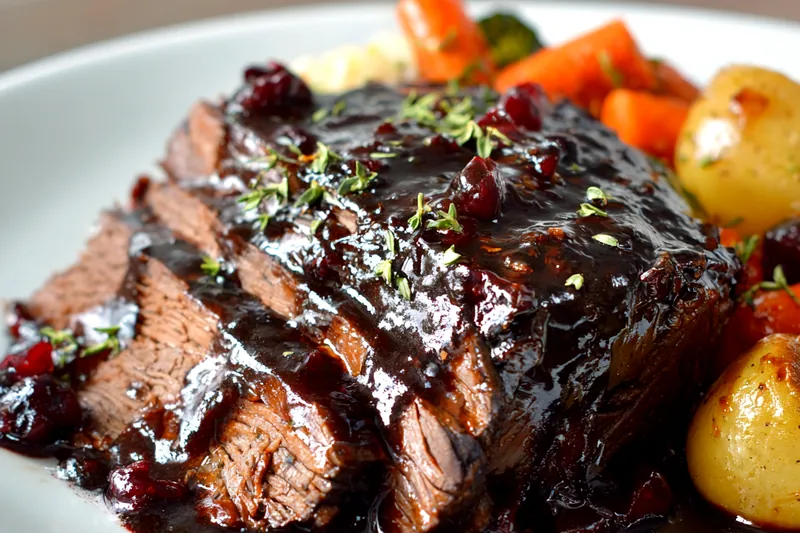
Serve the sliced beef with the cranberry balsamic glaze drizzled on top.
Recipe Notes & Tips
Storage
Store leftovers in an airtight container in the refrigerator for up to 3 days. Reheat gently in the oven or on the stovetop with a splash of broth.
Serving
This dish pairs beautifully with mashed potatoes, roasted vegetables, or a fresh salad. Serve with the glaze drizzled over the top for extra flavor.
Variations
Feel free to experiment with different cuts of beef, such as brisket or round. You can also add vegetables like carrots and potatoes to the braise for a complete meal.