Homemade Oat Topped Bread
Homemade Oat Topped Bread is a delightful snack that combines the nutty flavor of oats with a soft, fluffy bread base. Perfect for sandwiches or simply toasted with butter, this recipe is easy to follow and yields a satisfying result. You'll love the aroma that fills your kitchen as it bakes, making it a perfect addition to any meal or snack time.


Why This Homemade Oat Topped Bread Recipe Works
This recipe stands out because of the unique combination of oats and traditional bread ingredients, providing a delightful crunch and added nutrition. The use of rolled oats on top creates a beautiful presentation and enhances the bread's flavor. The method ensures a soft interior while maintaining a crispy crust.
The technique of two rises ensures that the bread is light and airy. Kneading the dough properly develops gluten, giving the bread its structure. By baking at the right temperature, you achieve a perfectly golden crust that’s both visually appealing and delicious.
💡 Professional Tip
For the best results, ensure all your ingredients are at room temperature before you begin. This allows the yeast to activate more effectively, resulting in a better rise. Additionally, don’t skip the second rise; it’s crucial for achieving that light texture.
Frequently Asked Questions
Yes, you can prepare the dough ahead of time and refrigerate it after the first rise. Just allow it to come to room temperature and complete the second rise before baking. This allows the flavors to develop even further.
You can use whole wheat flour or a gluten-free flour blend, but be aware that the texture may vary. If using whole wheat flour, consider adding a bit more liquid as it absorbs moisture differently.
The bread is done when it is golden brown on top and sounds hollow when tapped on the bottom. You can also use a thermometer; the internal temperature should reach about 190°F (88°C).
Absolutely! Once the bread has cooled completely, wrap it tightly in plastic wrap and place it in a freezer bag. It can be frozen for up to three months. To enjoy, simply thaw at room temperature.
This bread pairs wonderfully with butter, jams, or even savory spreads like cream cheese or hummus. It also works great as a base for sandwiches or toast topped with avocado.
When stored in an airtight container, this bread can last for about 4-5 days in the fridge. For the best texture, you may want to toast it lightly before serving.
Yes, you can bake it a day in advance. Just store it at room temperature in a breadbox or an airtight container. It will taste just as fresh when served the next day.
To reheat, preheat your oven to 350°F (175°C) and wrap the bread in aluminum foil. Heat for about 10-15 minutes until warmed through, or slice and toast for a quick option.
Recipe Troubleshooting Guide
Too Dry
Problem: If your bread turns out too dry, it might be due to overbaking or insufficient moisture in the dough.
Solution: Make sure to monitor the baking time closely and consider adding a little more liquid next time to ensure a moist dough.
Not Crispy Enough
Problem: A bread that lacks crispiness may be due to not baking it long enough or not using a hot enough oven.
Solution: Ensure your oven is preheated properly and consider baking a few minutes longer while watching closely to prevent burning.
Overcooked
Problem: If the bread is too dark or hard, it may have been baked too long or at too high a temperature.
Prevention: Lower the temperature next time and check for doneness a few minutes earlier to avoid overcooking.
Undercooked Center
Problem: An undercooked center can happen if the bread is not baked long enough or if the oven temperature is too low.
Recovery: Make sure to bake until the bread is golden brown and test for doneness using a thermometer to ensure the center is fully cooked.
Burnt Exterior
Problem: A burnt exterior often results from too high of an oven temperature or baking too long.
Prevention: Reduce the temperature and use a light-colored baking pan to help avoid burning the crust.
Flavor Balance
Too Sweet: If the bread is too sweet, reduce the sugar in the recipe next time to balance the flavors.
Too Salty: If it tastes too salty, ensure you are measuring salt correctly, and consider using less next time.
Bland: To enhance flavor if the bread is bland, add herbs or spices to the dough such as garlic powder or rosemary.
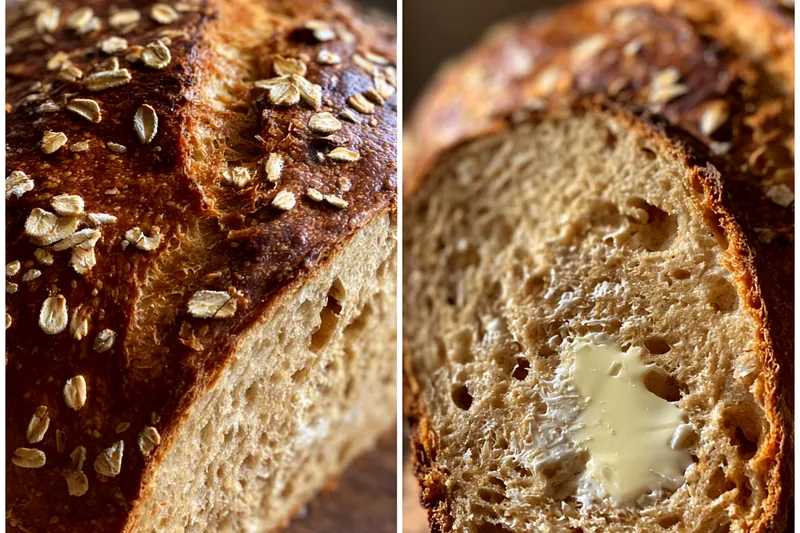
Essential Ingredients for Homemade Oat Topped Bread
The key ingredients in this recipe include all-purpose flour, rolled oats, and active dry yeast, which work together to create a light and fluffy bread with a satisfying texture. The oats not only enhance the flavor but also provide additional nutrition, making this bread a healthier choice for snacking.
Using high-quality ingredients is crucial for the best flavor and texture. Opt for fresh oats and good-quality flour to ensure your bread rises well and has an appealing taste. Additionally, using fresh yeast can significantly improve the bread’s rise and overall quality.
Essential Ingredient Notes
- Rolled Oats: When selecting rolled oats, choose ones labeled 'old-fashioned' for the best texture in baking. These oats hold their shape well and add a delightful chewiness to the bread.
- Active Dry Yeast: Always check the expiration date on your yeast. To ensure it’s active, you can proof it by adding it to warm water with a bit of sugar before mixing it into the dough.
- Olive Oil: Using high-quality olive oil not only adds flavor but also contributes to the moisture of the bread. For a richer taste, you can experiment with flavored oils.
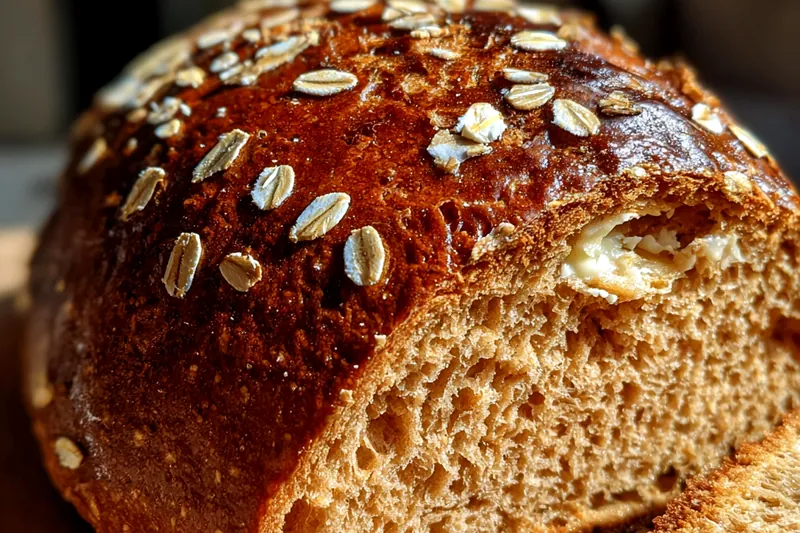
Step-by-Step Cooking Process
Creating this bread is an enjoyable experience that anyone can master. Start by preparing the dough and allowing it to rise, ensuring to knead well for the best texture. The two-rising method is essential for achieving a light and airy loaf.
Take care to shape the loaf properly and let it rise before baking, as this step greatly affects the final outcome. Once baked, allow the bread to cool slightly before slicing to maintain its texture.
Key Technique for Perfect Homemade Oat Topped Bread
The key to perfecting this bread is in the kneading and rising process. Proper kneading develops gluten, which gives the bread its airy structure. Ensuring that the dough rises in a warm environment allows the yeast to work effectively, resulting in a soft and fluffy bread.
Homemade Oat Topped Bread
📋 Ingredients
Main Ingredients
- 1 cup butterRoom temperature
For the Topping
- 2 cups all-purpose flourFor the dough
- 1 cup rolled oatsFor the dough and topping
- 1 tablespoon sugarFor sweetness
- 1 teaspoon saltFor flavor
- 1 packet active dry yeastFor leavening
- 1 cup warm waterTo activate yeast
- 2 tablespoons olive oilFor moisture
- 1 teaspoon honeyFor flavor
- 1/2 cup milkFor richness
- 1/2 teaspoon cinnamonFor flavor
- 1/4 cup rolled oats (for topping)For garnish
- 1 eggFor egg wash
Instructions
Prepare the Dough
In a large bowl, combine flour, oats, sugar, salt, and yeast. Mix well.
Add Wet Ingredients
Add warm water, olive oil, honey, and milk. Mix until a dough forms.
Knead the Dough
Transfer the dough to a floured surface and knead for about 10 minutes until smooth.
First Rise
Place the dough in a greased bowl, cover with a cloth, and let it rise in a warm area for 1 hour.
Shape the Dough
After rising, punch down the dough and shape it into a loaf.
Second Rise
Place the shaped loaf in a greased loaf pan and let it rise for another 30 minutes.
Preheat the Oven
Preheat the oven to 375°F (190°C).
Prepare for Baking
Brush the top of the loaf with egg wash and sprinkle with rolled oats.
Bake
Bake in the preheated oven for 30-35 minutes or until golden brown.
Cool and Serve
Remove from the oven, let cool for a few minutes, then slice and enjoy!
Recipe Notes & Tips
Storage Tips
To store Homemade Oat Topped Bread, place it in an airtight container at room temperature for up to 4-5 days. If you prefer longer storage, consider freezing it, which can prolong its freshness for several months.
Serving Suggestions
This bread is versatile and can be served alongside soups, salads, or as a base for toast. Top it with your favorite spreads such as butter, honey, or avocado for a delightful treat.
Recipe Variations
Feel free to experiment with different toppings like seeds, nuts, or cheese. Adding herbs like rosemary or garlic can also enhance the flavor and make it more exciting.