Creamy Chicken Orzo with Asparagus and Parmesan
Experience comfort in a bowl with this irresistible Creamy Chicken Orzo with Asparagus and Parmesan. This delightful dish combines tender, succulent chicken with delicate orzo pasta, crisp-tender asparagus, and a luxurious, cheesy cream sauce. It's a perfect balance of flavors and textures, making it an ideal choice for a satisfying weeknight dinner that feels gourmet. Quick to prepare and incredibly flavorful, this recipe is sure to become a family favorite.


Why This Creamy Chicken Orzo with Asparagus and Parmesan Recipe Works
This Creamy Chicken Orzo with Asparagus and Parmesan isn't just another pasta dish; it's a culinary triumph born from a desire for both comfort and efficiency. It works so well because it masterfully balances rich, savory flavors with fresh, vibrant textures. The tender chicken and al dente orzo create a satisfying base, while the crisp-tender asparagus adds a delightful crunch and a hint of spring.
The secret lies in cooking the orzo directly in chicken broth, infusing it with flavor from the start, and then finishing it with heavy cream and Parmesan for that undeniably luxurious, silky sauce. This 'one-pot-ish' technique minimizes dishes and maximizes taste, ensuring every forkful is a perfect blend of creamy, cheesy, and fresh, making it an instant crowd-pleaser that delivers on both taste and convenience.
💡 Professional Tip
To prevent your chicken from becoming dry and to ensure a perfect sear, make sure your skillet is adequately hot before adding the chicken. Sear it in batches if necessary, giving each piece enough space to brown properly without steaming. This creates a flavorful fond at the bottom of the pan, which will contribute immense depth to your creamy sauce.
Frequently Asked Questions
While the dish is best enjoyed fresh due to the delicate nature of cooked orzo and asparagus, you can certainly do some prep work in advance. You can cook and cube the chicken, chop the shallots and garlic, and trim the asparagus the day before. Store them separately in airtight containers in the refrigerator. This will significantly cut down on your active cooking time when you're ready to assemble the meal.
For a lighter alternative to heavy cream, you can use half-and-half or evaporated milk, though the sauce won't be as rich or thick. For a dairy-free option, full-fat coconut milk (ensure it's unsweetened) can work, but it will impart a subtle coconut flavor. Alternatively, a cornstarch slurry (1 tbsp cornstarch mixed with 2 tbsp cold water) can be added to regular milk or broth to help thicken the sauce, though it won't achieve the same creamy mouthfeel as heavy cream.
You'll know the dish is done when the orzo pasta is al dente (tender with a slight bite), the asparagus is vibrant green and tender-crisp (not mushy), and the chicken is fully cooked with no pink remaining. The sauce should be creamy and coating the orzo, not overly soupy or too dry. A quick taste test of the orzo and asparagus will confirm their perfect texture.
Freezing this dish is not recommended. Orzo pasta tends to become mushy and absorb too much liquid when thawed and reheated, and asparagus can lose its tender-crisp texture. The creamy sauce may also separate upon freezing and thawing, resulting in an unappealing texture. It's best to enjoy this dish fresh or refrigerate for a short period.
This dish is quite complete on its own, but a simple side can complement it beautifully. A crisp green salad with a light vinaigrette would add freshness. Crusty bread or garlic bread is excellent for soaking up any extra creamy sauce. A light, dry white wine like a Sauvignon Blanc or Pinot Grigio would also pair wonderfully.
Properly stored in an airtight container, leftover Creamy Chicken Orzo with Asparagus and Parmesan will last for up to 2-3 days in the refrigerator. Beyond this, the pasta can become too soft, and the texture and flavor may decline. Always ensure it's cooled completely before storing to prevent bacterial growth.
While I don't recommend making the entire dish completely in advance for the best quality, certain components can be prepped. You can cook the chicken ahead of time and store it. The aromatics (shallots and garlic) can be chopped. The asparagus can be trimmed. This preparation allows for a much quicker assembly on the day you plan to serve it, bringing the cook time down significantly.
To reheat, gently warm leftovers in a skillet over medium-low heat. You'll likely need to add a splash of chicken broth or a little extra heavy cream to loosen the sauce, as the orzo will have absorbed more liquid. Stir frequently until heated through. Avoid microwaving if possible, as it can make the chicken tough and the orzo mushy.
Recipe Troubleshooting Guide
Too Dry
Problem: The orzo has absorbed too much liquid, and the dish feels dry, not creamy.
Solution: If your orzo dish becomes too dry, simply add a splash more chicken broth or heavy cream (1/4 to 1/2 cup) while reheating or before serving. Stir it in gently over low heat until the desired creamy consistency is achieved. Taste and re-season if necessary.
Orzo Too Mushy
Problem: The orzo pasta is overcooked and has a mushy, glue-like texture.
Solution: Overcooked orzo typically happens from simmering for too long or with too much liquid. To prevent this, closely monitor the cooking time specified in the recipe. The orzo should be al dente. If it's already mushy, unfortunately, it's hard to reverse, but you can try to add some fresh, uncooked orzo and cook it quickly in the existing sauce to improve the overall texture.
Overcooked Ingredients
Problem: The chicken is tough, or the asparagus is limp and mushy.
Prevention: To prevent overcooked chicken, sear it just until golden brown and cooked through (internal temp 165°F/74°C), then remove it from the pan. Re-introduce it only at the very end to warm through. For asparagus, add it in the final 5-7 minutes of simmering; it should be tender-crisp, retaining a slight bite and vibrant green color.
Undercooked Chicken
Problem: The chicken pieces are browned on the outside but still pink or raw in the center.
Recovery: Ensure chicken pieces are cut into uniform 1-inch cubes for even cooking. Don't overcrowd the pan, as this lowers the temperature and steams the chicken instead of searing it. If necessary, cook chicken in two batches. If you find chicken is undercooked, return it to the pan with a little broth, cover, and gently simmer until cooked through.
Sticking or Burning on Bottom
Problem: The orzo or sauce is sticking to the bottom of the pan and beginning to burn.
Prevention: This often occurs if the heat is too high or if the orzo isn't stirred frequently enough. Use a heavy-bottomed skillet or Dutch oven. Ensure the heat is reduced to medium-low once the broth is added for simmering, and stir the orzo mixture every few minutes, especially when covered. If sticking starts, scrape the bottom gently but firmly with a wooden spoon to prevent burning.
Flavor Balance
Too Sweet: This dish isn't typically sweet, but if flavors feel off, a touch of acid like lemon juice can help rebalance.
Too Salty: If too salty, add a splash more unsalted chicken broth or heavy cream to dilute the saltiness. A squeeze of fresh lemon juice can also help counteract it. Ensure you're using low-sodium broth and taste before adding salt.
Bland: If the dish tastes bland, it likely needs more seasoning. Add a pinch more salt, freshly ground black pepper, and consider a dash of garlic powder or onion powder. Fresh herbs like more parsley, or a touch of red pepper flakes, can also enhance the overall flavor.
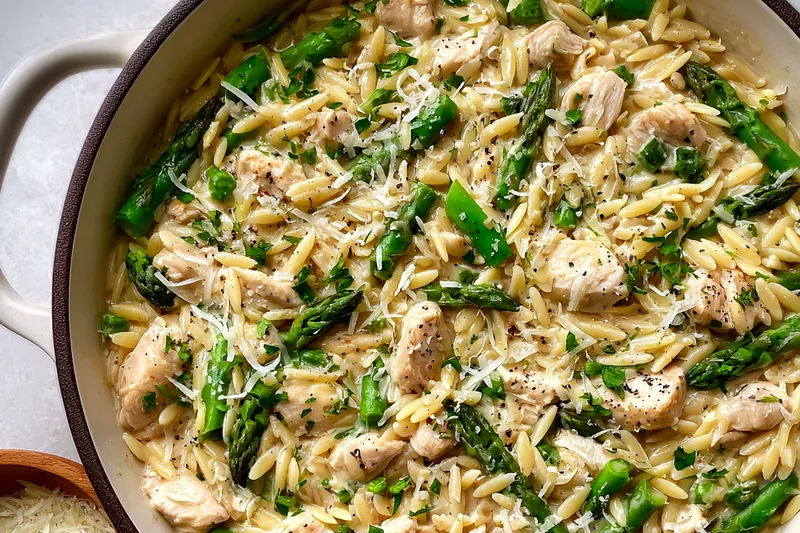
Essential Ingredients for Creamy Chicken Orzo with Asparagus and Parmesan
The heart of this Creamy Chicken Orzo with Asparagus and Parmesan lies in its carefully selected, simple ingredients that come together to create a symphony of flavors. Boneless, skinless chicken breasts provide lean protein, while orzo pasta offers a delightful texture that's larger than rice but smaller than traditional pasta shapes. Fresh asparagus spears introduce a vibrant green hue and a pleasant, slightly earthy crunch, balancing the richness of the dish.
Crucial to the 'creamy' aspect are heavy cream and grated Parmesan cheese, which form a luscious, savory sauce. Good quality chicken broth serves as the flavorful base for cooking the orzo, ensuring every grain is infused with depth. Fresh aromatics like shallots and garlic provide foundational flavor, making each component indispensable to the overall success and deliciousness of this comforting meal.
Essential Ingredient Notes
- Chicken Breasts: For tender and evenly cooked chicken, cut your boneless, skinless chicken breasts into uniform 1-inch cubes. Pat them thoroughly dry with paper towels before seasoning and searing. This ensures a beautiful golden crust and prevents the chicken from steaming, locking in juices and flavor.
- Asparagus: Always snap off the woody ends of your asparagus. To do this, simply hold an asparagus spear at both ends and bend it gently; it will naturally break where the tough part begins. For optimal texture and color, add asparagus during the last few minutes of cooking, aiming for tender-crisp.
- Orzo Pasta: Orzo cooks quickly and can easily become mushy if overcooked. When simmering in the broth, stir occasionally to prevent sticking and keep a close eye on it. It should be al dente—cooked through but still with a slight bite—before adding the cream and cheese. This ensures a pleasant texture in your final dish.

Step-by-Step Cooking Process
Crafting this Creamy Chicken Orzo with Asparagus and Parmesan is a straightforward and enjoyable process that builds layers of flavor. It begins with searing the chicken to golden perfection, creating a flavorful fond in the pan. This fond is then deglazed by sautéing aromatics like shallots and garlic, setting the stage for a rich sauce. The orzo is cooked directly in chicken broth, absorbing all its savory goodness.
The beauty of this method lies in its efficiency and the seamless integration of ingredients. As the orzo simmers, it releases starches, contributing to the sauce's creaminess. The final addition of fresh asparagus, heavy cream, and Parmesan cheese transforms the dish into a luxurious, well-balanced meal. Careful timing ensures the chicken remains tender and the asparagus retains its delightful crispness, resulting in a dish that's both comforting and elegant.
Key Technique for Perfect Creamy Chicken Orzo with Asparagus and Parmesan
The most crucial technique for this dish is building the creamy sauce and cooking the orzo directly in the broth. By toasting the orzo slightly before adding the liquid, and then simmering it gently in chicken broth, you infuse the pasta with deep flavor while its starches are released, naturally thickening the sauce. Adding the cream and Parmesan at the end creates that rich, velvety texture without making the sauce grainy or curdled, ensuring a luxurious finish.
Creamy Chicken Orzo with Asparagus and Parmesan
📋 Ingredients
Main Ingredients
- 2 tbsp unsalted butterFor sautéing
- 1 large shallotFinely diced
- 3 cloves garlicMinced
- 4 cups chicken brothLow sodium
- 1 cup heavy creamFull fat for richness
- 1 cup grated Parmesan cheesePlus more for garnish
For the Sauce
- 1.5 lbs boneless, skinless chicken breastsCut into 1-inch cubes
- 2 tbsp olive oilDivided
- 1 cup orzo pastaDry
- 1 lb asparagusTrimmed and cut into 1-inch pieces
- 1/2 cup fresh parsleyChopped, for freshness
- 1 tbsp fresh lemon juice(Optional) For brightness
- Salt and freshly ground black pepperTo taste
- Pinch of red pepper flakes(Optional) For heat
Instructions
Prepare Chicken
Pat chicken cubes dry with paper towels and season generously with salt and black pepper. Heat 1 tbsp olive oil in a large skillet or Dutch oven over medium-high heat. Add chicken in a single layer (cook in batches if necessary to avoid overcrowding) and sear for 3-4 minutes per side until golden brown and cooked through. Remove chicken from skillet and set aside.
Sauté Aromatics
Reduce heat to medium. Add remaining 1 tbsp olive oil and 2 tbsp butter to the same skillet. Add diced shallot and cook for 2-3 minutes until softened. Stir in minced garlic and cook for another minute until fragrant, being careful not to burn the garlic.
Cook Orzo
Add orzo pasta to the skillet and stir for 1 minute to lightly toast. Pour in the chicken broth. Bring the mixture to a simmer, then reduce heat to medium-low, cover, and cook for 10-12 minutes, or until most of the liquid is absorbed and the orzo is al dente, stirring occasionally to prevent sticking.
Add Asparagus and Cream
Stir in the heavy cream and asparagus pieces. Continue to simmer, uncovered, for another 5-7 minutes, or until the asparagus is tender-crisp and the sauce has thickened slightly. The orzo will continue to absorb liquid.
Combine and Finish
Return the cooked chicken to the skillet. Stir in 1 cup of grated Parmesan cheese and chopped fresh parsley. If desired, add a squeeze of fresh lemon juice for brightness and a pinch of red pepper flakes for a subtle kick.
Adjust Seasoning and Serve
Taste and adjust seasoning with additional salt and pepper as needed. If the sauce is too thick, add a splash more chicken broth or cream. Serve immediately, garnished with extra Parmesan cheese and fresh parsley.
Recipe Notes & Tips
Storage Tips
Store any leftover Creamy Chicken Orzo with Asparagus and Parmesan in an airtight container in the refrigerator for up to 2-3 days. Ensure the dish has cooled completely before transferring it to storage to prevent condensation and bacterial growth. For best results, consume within 48 hours to maintain optimal texture and flavor.
Serving Suggestions
This dish is a complete meal on its own, but it pairs wonderfully with a simple side salad dressed with a light vinaigrette to add a refreshing contrast. A slice of crusty artisan bread or warm garlic bread is perfect for soaking up every last bit of the delicious creamy sauce. For a light beverage, consider a crisp white wine.
Recipe Variations
Feel free to customize this recipe! You can swap chicken for shrimp or even make it vegetarian by omitting the meat and adding mushrooms or sun-dried tomatoes. Other vegetables like peas, spinach, or broccoli can be used instead of or in addition to asparagus. For a different cheese profile, try adding a touch of Pecorino Romano or Gruyère for extra depth.